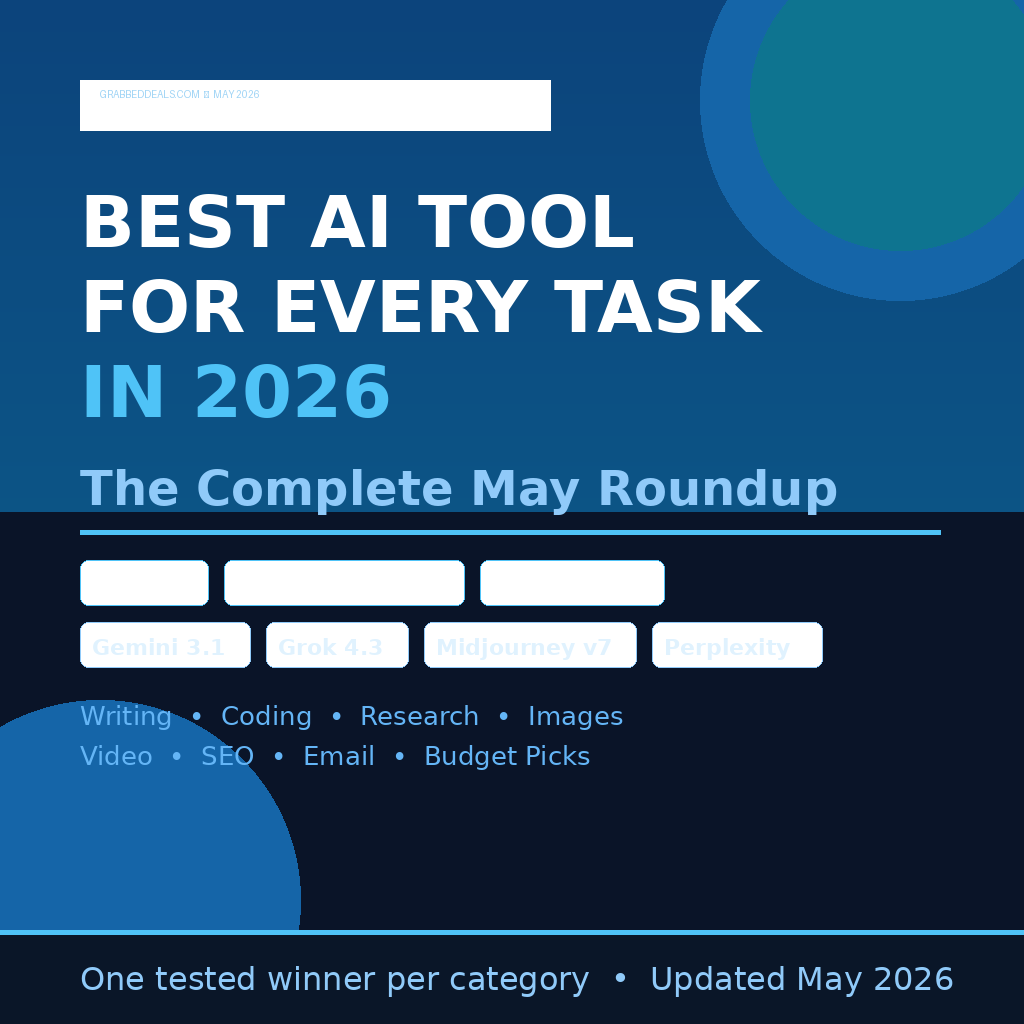
Five serious frontier models now compete for your subscription in May 2026, and none of them is best at everything. GPT-5.5 dominates coding benchmarks. Claude Opus 4.7 leads on long-form writing and reasoning. DeepSeek V4 punches above its price point. Grok 4.3 just got a 40% price cut. Gemini 3.1 is growing faster than any other paid AI product this year.
Choosing the best AI tool is the wrong question. Choosing the best AI tool for your specific task is the right one. This roundup covers eight core task categories and names one clear winner per category, based on current model performance as of May 2026.
KEY TAKEAWAYS
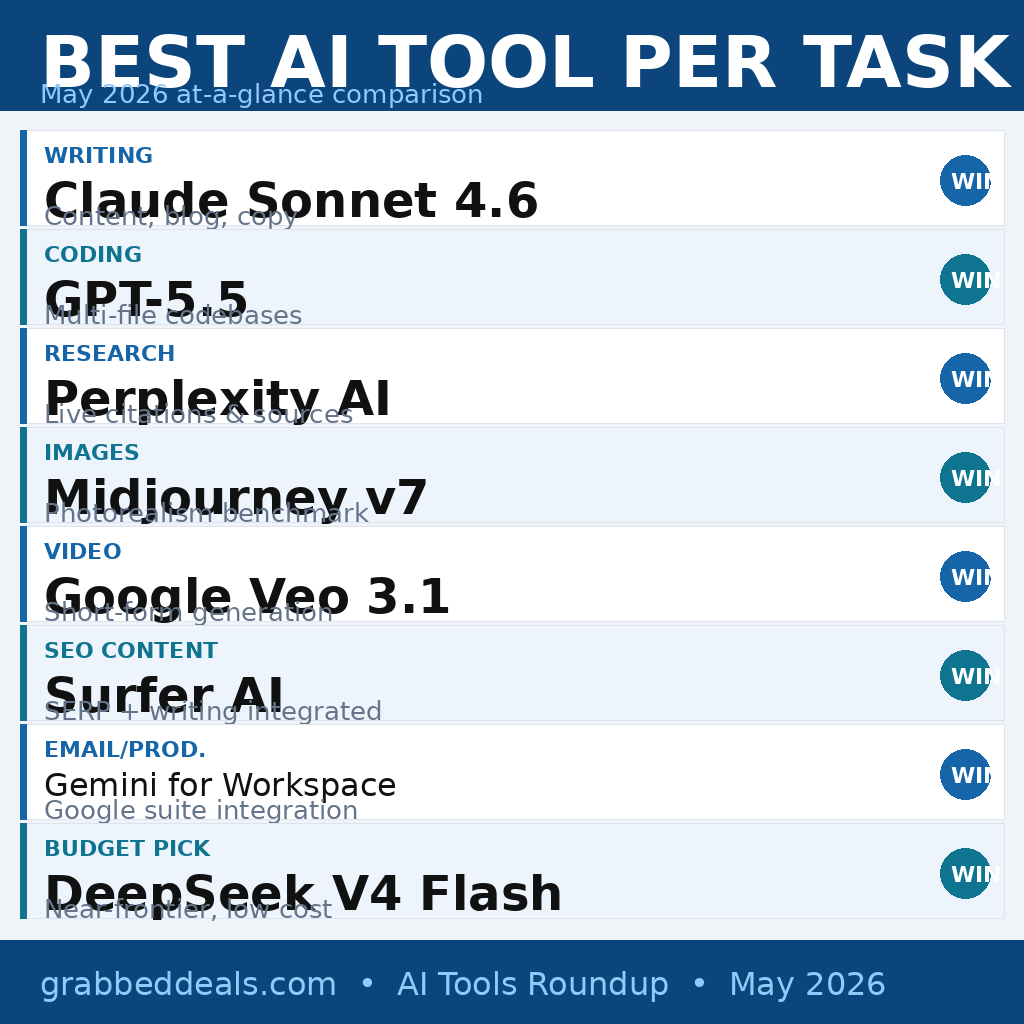
- Writing winner: Claude Sonnet 4.6 produces the most natural, instruction-following prose in 2026 for everyday content tasks
- Coding winner: GPT-5.5 and Claude Opus 4.7 are tied at the top, with GPT-5.5 edging ahead on multi-file codebases
- Research winner: Perplexity AI remains the most reliable tool for cited, real-time research
- Image generation winner: Midjourney v7 leads on photorealism; DALL-E 3 (via ChatGPT) wins on speed and convenience
- Video generation winner: Google’s Veo 3.1 is the current benchmark for AI video in 2026
- SEO content winner: Surfer AI integrates data and writing in one workflow better than any standalone model
- Budget pick across all tasks: DeepSeek V4 Flash offers near-frontier quality at a fraction of the cost
The AI landscape in May 2026
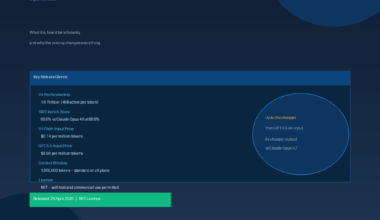
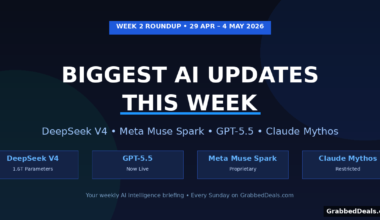
Three major frontier model releases landed between 16 April and 5 May 2026. OpenAI shipped GPT-5.5 on 23 April and made it the default ChatGPT experience on 5 May. Anthropic released Claude Opus 4.7 on 16 April with notable improvements on the SWE-bench coding benchmark. DeepSeek dropped V4 Pro and Flash on 24 April. Grok 4.3 went generally available on 30 April with a 40% price reduction. Gemini 3.1 is now the fastest-growing paid AI subscription product, up 258% year-on-year.
Five credible frontier models competing simultaneously is genuinely new territory. None of them is the outright winner at everything. The sections below break down which one to use and why, category by category.
1. Best AI tool for writing
Winner: Claude Sonnet 4.6 (Anthropic)
For everyday writing tasks, including blog posts, marketing copy, email drafts, and long-form content, Claude Sonnet 4.6 is the most consistent performer in May 2026. It follows detailed formatting instructions more reliably than GPT-5.5, produces fewer filler phrases, and handles tone variations across brand voices with less prompting.
Claude Opus 4.7 is more capable for complex writing, but the cost premium is hard to justify unless you are working on high-stakes long-form content at scale. For most writers, Claude Sonnet 4.6 at the mid-tier price point is the practical choice.
GPT-5.5 is a close second and remains excellent for conversational copy, social media content, and anything requiring a fast, punchy voice. The difference at the top end is narrow, but Claude’s instruction-following consistency gives it the edge for structured content work.
Best for: Blog writers, content marketers, copywriters, email marketers
2. Best AI tool for coding
Winner: GPT-5.5 (OpenAI) and Claude Opus 4.7 (Anthropic)
This is the one category where two models genuinely share the top spot in May 2026. GPT-5.5 leads on multi-file codebase navigation and is the stronger choice when you need an AI that understands a large existing project. Claude Opus 4.7 leads on code explanation, documentation, and debugging complex logic, with SWE-bench scores that rival GPT-5.5 on single-file tasks.
If you write code from scratch frequently, GPT-5.5 is slightly more reliable on test-driven development and framework-specific patterns. If you spend more time reviewing, refactoring, or explaining code to teammates, Claude Opus 4.7 produces better output.
DeepSeek V4 Pro is worth a mention here for price-sensitive developers. It performs at roughly 85% of the quality of the top two for most standard coding tasks, at a significantly lower cost. For solo developers and freelancers on a budget, DeepSeek V4 Pro is the most credible cost-cutting option in 2026.
Internal link opportunity: [Read our comparison of the best AI coding tools in 2026] for benchmark details.
Best for: Software developers, freelance coders, technical writers, dev teams on a budget
3. Best AI tool for research
Winner: Perplexity AI
For research tasks that require up-to-date, cited information, Perplexity AI remains in a category of its own in 2026. It retrieves live web sources, surfaces citations inline, and structures complex research questions into readable summaries faster than any general-purpose model.
GPT-5.5 with web search enabled is a reasonable alternative for users who prefer to stay within the ChatGPT ecosystem. However, Perplexity’s dedicated research workflow, including follow-up question prompting and source comparison, still makes it the faster choice when research quality and citation accuracy are the priority.
For academic or professional research where source verification matters, Perplexity Pro is one of the most defensible AI subscriptions available in May 2026. The free tier is also generous and covers most casual research needs.
Best for: Journalists, researchers, students, consultants, anyone fact-checking at speed
4. Best AI tool for image generation
Winner: Midjourney v7 (photorealism), DALL-E 3 via ChatGPT (convenience)
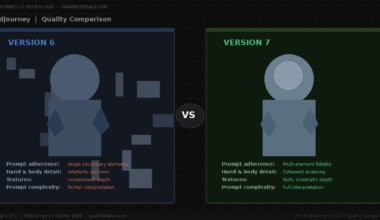
Midjourney v7, released in early 2026, is the current benchmark for photorealistic AI image generation. Skin texture, lighting consistency, and architectural detail are all noticeably better than competing models. If image quality is your top priority, Midjourney v7 is the tool to use.
However, Midjourney still requires Discord or a separate interface. For users who want image generation inside a broader workflow without switching tools, DALL-E 3 via ChatGPT Plus remains the most convenient option. The quality gap between DALL-E 3 and Midjourney v7 has narrowed in 2026, and for most commercial content use cases, DALL-E 3 is fast enough.
Google’s Imagen 3.1 inside Gemini is worth watching. It has improved significantly since launch and is a strong option for Google Workspace users who want native integration.
Best for: Designers, content creators, marketers, social media managers
5. Best AI tool for video generation
Winner: Google Veo 3.1
AI video generation matured significantly between late 2025 and May 2026. Google Veo 3.1 is the current leader for short-form video creation, with better motion consistency and prompt adherence than OpenAI’s Sora or Runway Gen-3. For clips under 30 seconds, Veo 3.1 produces commercially usable output at a quality that was not achievable from any AI model 18 months ago.
Runway Gen-3 remains the better choice for longer sequences and for users who need more granular editing control frame by frame. It is the preferred tool among video professionals who use AI as one step in a larger post-production workflow.
Best for: Social media content creators, marketers, video editors, YouTube creators
6. Best AI tool for SEO content
Winner: Surfer AI
For SEO-driven content specifically, Surfer AI offers something no standalone language model can match: it combines real-time SERP analysis with AI writing in a single interface. It builds content briefs from live competitor data, tracks keyword density as you write, and scores content against the pages currently ranking. This integrated workflow saves significant time compared to using a general AI model alongside a separate SEO tool.
ChatGPT Plus and Claude are capable of producing SEO-optimised drafts when prompted well, but they require you to supply the brief, the keywords, and the structure yourself. Surfer AI automates that research step, which is where most of the time saving comes from.
For small-scale content teams and solo SEOs who cannot afford enterprise tools, Surfer AI at its current pricing is one of the best value-per-output subscriptions in the SEO stack in 2026.
External link: Surfer AI official pricing and plans
Best for: SEO content writers, digital marketers, bloggers monetising through organic search
7. Best AI tool for email and productivity
Winner: Gemini for Google Workspace
For professionals whose work lives inside Google Workspace, Gemini’s native integration across Gmail, Docs, and Drive makes it the most practical AI productivity tool in 2026. It drafts replies from email threads, summarises long documents, and generates meeting notes without requiring you to copy content into a separate tool.
Microsoft 365 Copilot (powered by GPT-5.5) is the direct competitor for Microsoft ecosystem users, and the quality difference between the two is minimal. The choice here comes down almost entirely to which productivity suite you already use.
External link: Google Workspace Gemini plans
Best for: Professionals in Google Workspace, executives managing high email volume, remote teams
8. Best AI tool on a budget
Winner: DeepSeek V4 Flash
If you need a capable AI tool and cannot or do not want to pay for a premium subscription, DeepSeek V4 Flash is the most credible free-to-low-cost option in May 2026. Following Grok 4.3’s 40% price cut, budget-friendly frontier-class AI is more accessible than it has ever been. But DeepSeek V4 Flash consistently performs above what its price point suggests.
For writing, research, and light coding tasks, V4 Flash delivers output that most users will struggle to distinguish from mid-tier paid models. It is not a replacement for Opus-class or GPT-5.5 on complex tasks, but for daily general-purpose use it is the strongest value option currently available.
External link: DeepSeek V4 official models page
Best for: Students, freelancers watching costs, anyone exploring AI for the first time
Final verdict
There is no single best AI tool in May 2026. There are five credible frontier models and each leads in a different category. For most professionals, the practical answer is to pick two: one general-purpose tool for writing and productivity (Claude Sonnet 4.6 or ChatGPT Plus), and one specialist tool for your primary use case (Perplexity for research, Surfer AI for SEO, Midjourney for images). If budget is the deciding factor, DeepSeek V4 Flash covers the majority of everyday tasks at a fraction of the cost of the premium alternatives.
Frequently asked questions
Which AI tool is best overall in 2026? There is no single best AI tool for all tasks in 2026. GPT-5.5 leads for coding and general chat. Claude Opus 4.7 leads for long-form writing and complex reasoning. Perplexity leads for research. The right answer depends entirely on what you need it for. Most power users maintain two subscriptions: one general-purpose and one specialist.
Is DeepSeek V4 safe to use in 2026? DeepSeek V4 is a capable model for general tasks, but it is a Chinese-developed product hosted on servers outside the EU and US. Users handling sensitive business data, client information, or anything governed by GDPR or US privacy law should review DeepSeek’s data policy carefully before using it professionally. For general non-sensitive use, it is a legitimate cost-saving option.
Is Claude Opus 4.7 worth the price upgrade from Claude Sonnet 4.6? For most everyday content tasks, Claude Sonnet 4.6 is sufficient and the price difference does not justify the upgrade. Claude Opus 4.7 is worth the higher cost if you are doing complex reasoning, multi-step coding tasks, or long-form research synthesis where output quality directly affects your business. Casual users will not notice a meaningful difference in day-to-day tasks.
Can I use one AI tool for everything in 2026? You can, and ChatGPT Plus (GPT-5.5) comes closest to being a single tool for most tasks. It handles writing, coding, image generation, and productivity reasonably well. But if you want best-in-class output in any specific category, a specialist tool will outperform a generalist model. The most productive approach in 2026 is a two-tool stack, not a single subscription.
What is the cheapest capable AI tool in May 2026? DeepSeek V4 Flash is the strongest budget option in May 2026. Grok 4.3 is also worth considering following its 40% price cut in late April. Both deliver near-frontier quality on standard tasks. For users who only need occasional AI assistance, the free tiers of both ChatGPT and Claude cover most basic use cases without any subscription cost.
Author: The GrabbedDeals editorial team tests and reviews tech across every major category, from smartphones and laptops to AI tools and smart home devices. Our buying guides are built on the latest real-world data, independent expert reviews, and current pricing.
Explore our more pages – AI Tools & Productivity | Education & Learning | Travel | Smartphone Ecosystems | Laptop & PCs | Audio & Sound Systems | Gaming & Photography | EV & Green Tech | Digital Marketing & SEO | Smart Tech Deal & Buying Guides


1 comment